The Kailash Mansarovar Yatra via Lipulekh Pass in Uttarakhand is one of the most sacred and spiritually significant pilgrimage journeys for devotees of Lord Shiva. Organised by the Ministry of External Affairs (MEA), Government of India, this official route takes Indian pilgrims through the beautiful Himalayan landscapes of Uttarakhand before crossing the Lipulekh Pass into Tibet to reach the holy Mount Kailash and Lake Mansarovar.
- For millions of devotees, visiting Mount Kailash is a lifelong dream. According to Hindu beliefs, Mount Kailash is the divine abode of Lord Shiva and Goddess Parvati. Lake Mansarovar, located near the sacred mountain, is regarded as one of the holiest lakes in the world. Pilgrims believe that visiting these sacred places and completing the Kailash Parikrama brings spiritual peace and divine blessings.
- The Lipulekh Pass route is particularly special because it connects India’s Kumaon region with the Tibetan plateau through a historic Himalayan mountain passage. The journey begins in Delhi, continues through Tanakpur, Dharchula, Gunji and Nabhidhang, and then proceeds across Lipulekh Pass towards Purang (Taklakot), Lake Mansarovar and Mount Kailash.
- Unlike some privately operated Kailash Mansarovar tours, the Lipulekh route discussed in this article is the official Government of India pilgrimage programme, conducted through the Ministry of External Affairs in coordination with Kumaon Mandal Vikas Nigam (KMVN) and the concerned authorities.
- In this complete guide by Kailash Mansarovar Himalayas, we will cover the official route, registration procedure, eligibility criteria, documents, itinerary, estimated expenses, medical requirements and important travel information to help you prepare for this extraordinary pilgrimage.
What Is Kailash Mansarovar Yatra via Lipulekh Pass?
Lipulekh Pass is a high-altitude mountain pass located in the Kumaon region of Uttarakhand, near the India–Tibet border. It has historically been used as a trade and travel passage connecting the Indian Himalayan region with Tibet. The Lipulekh route is one of the two official routes for the Kailash Mansarovar Yatra organised by the Government of India. The other official route is through Nathu La Pass in Sikkim.
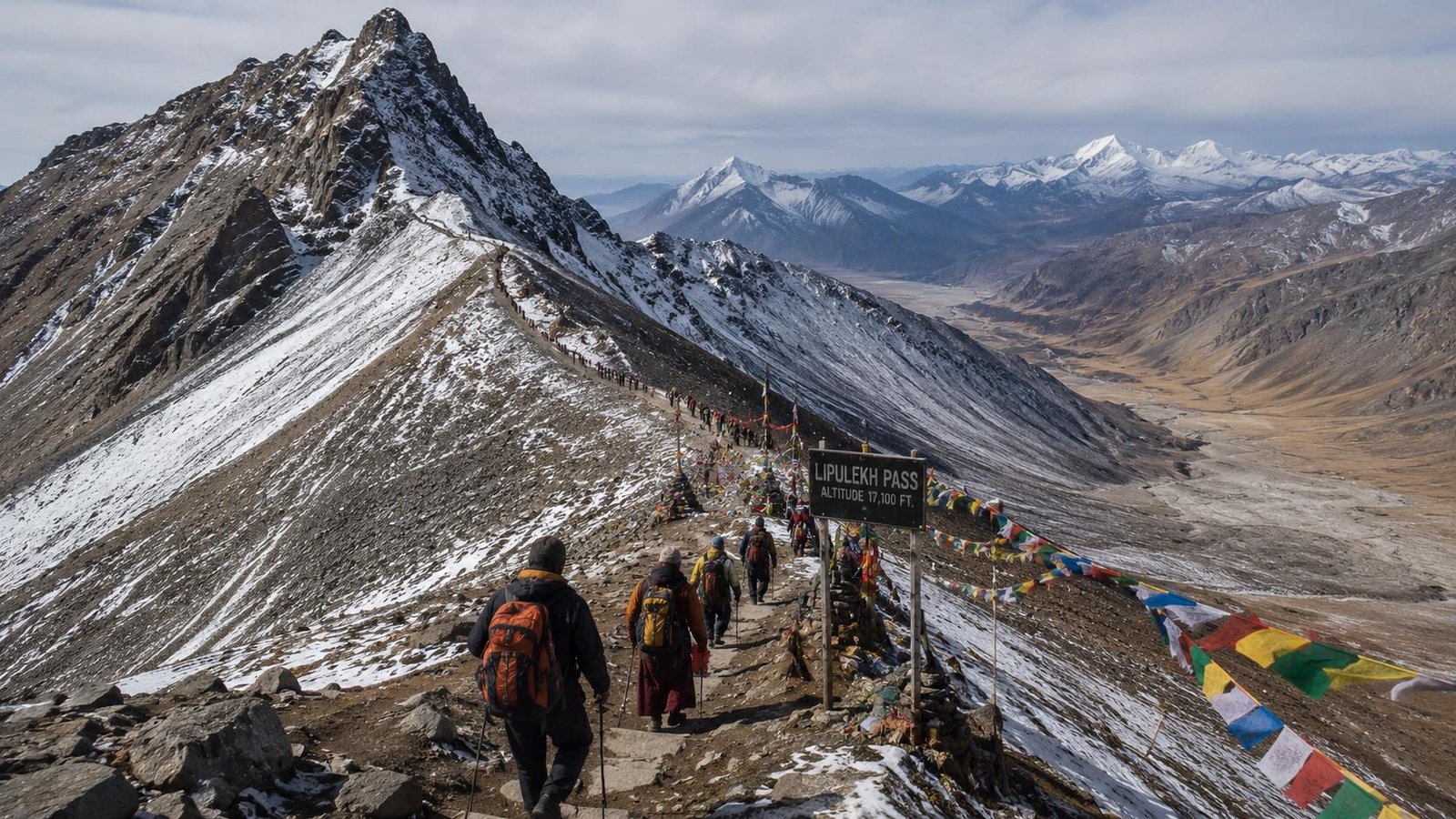
💫The pilgrimage is coordinated by:
- Ministry of External Affairs (MEA): Responsible for applications, selection, coordination and official arrangements.
- Kumaon Mandal Vikas Nigam (KMVN): Responsible for designated logistical arrangements on the Indian side.
- Indo-Tibetan Border Police (ITBP): Provides prescribed medical support and assistance at designated stages.
- Chinese Authorities: Coordinate the required entry permissions, border formalities and arrangements on the Tibetan side.
The Lipulekh route combines road transportation, high-altitude acclimatisation, a short border-crossing trek and the sacred Kailash Parikrama. It offers pilgrims an opportunity to experience the natural beauty of Uttarakhand, including remote Himalayan settlements, mountain valleys and the spectacular surroundings of Nabhidhang.
Kailash Mansarovar Yatra via Lipulekh Pass – Route Map
The official Lipulekh route begins in Delhi and proceeds through the Kumaon region of Uttarakhand before entering Tibet.
Major Route:
💫Delhi → Tanakpur → Dharchula → Gunji → Nabhidhang → Lipulekh Pass → Purang (Taklakot) → Lake Mansarovar → Darchen → Mount Kailash Parikrama → Lake Mansarovar region → Purang → Lipulekh Pass → Nabhidhang → Gunji → Dharchula → Chaukori → Almora → Delhi.
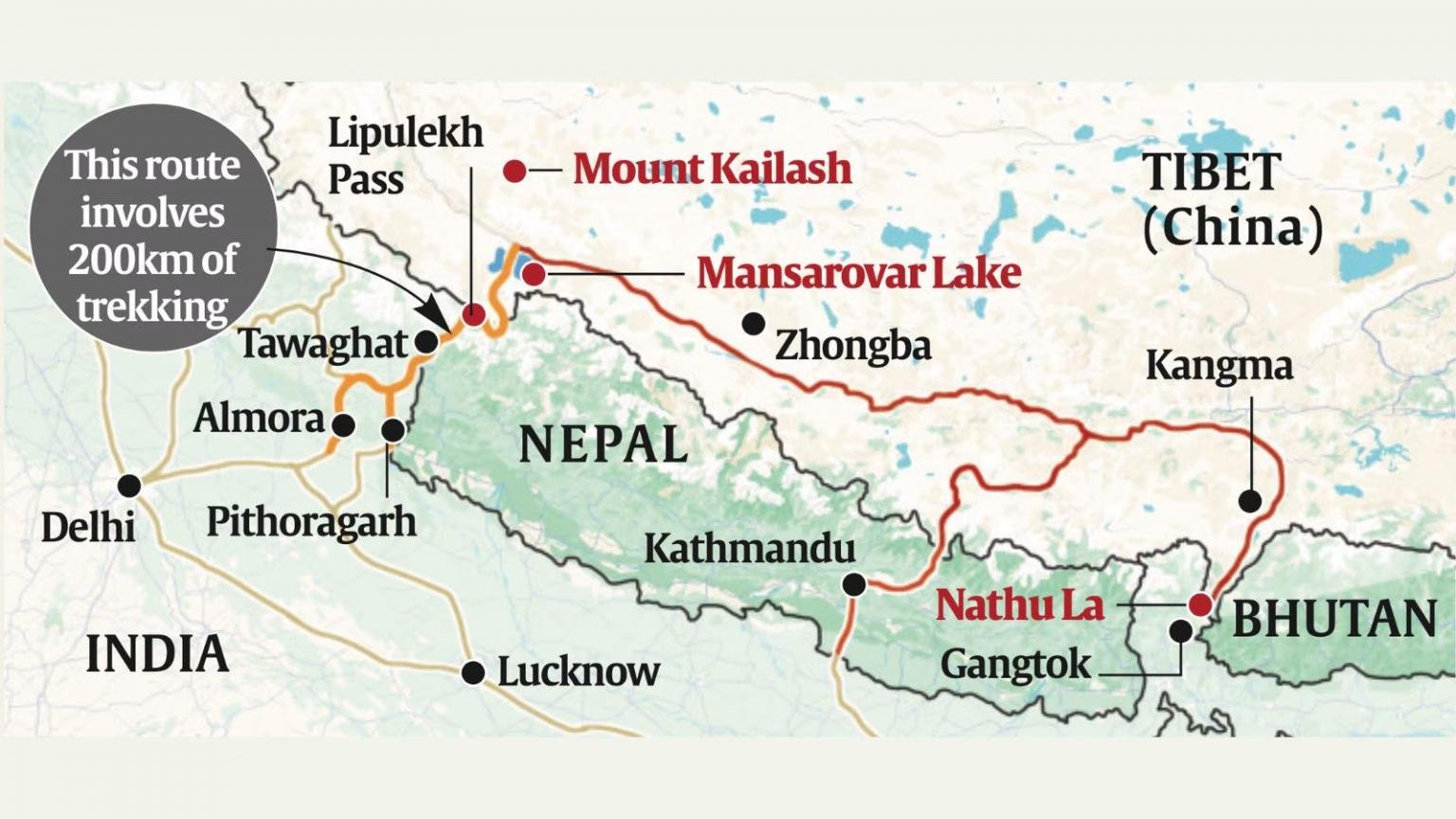
- The route passes through some of the most beautiful and geographically challenging areas of the Indian Himalayas.
- According to the 2026 tentative itinerary published on the official KMY portal, the Lipulekh Pass crossing is at approximately 5,050 metres, while the route includes designated acclimatisation halts at Gunji and Nabhidhang. The programme is subject to changes based on weather and local conditions.
Why Choose the Lipulekh Pass Route for Kailash Mansarovar Yatra?
The Lipulekh route has a special place among Indian pilgrims because of its historical, geographical and religious importance.
Here are some major highlights:
1. Official Government of India Route: The pilgrimage is organised under the Ministry of External Affairs, Government of India, providing a prescribed application, selection and travel process.
2. Scenic Himalayan Journey: The route passes through the beautiful Kumaon region, including Dharchula, Gunji, Kalapani and Nabhidhang.
3. Opportunity to See Om Parvat: Nabhidhang is famous for its spectacular view of Om Parvat, where the naturally formed snow pattern on the mountain resembles the sacred symbol Om, subject to visibility.
4. Historic Lipulekh Pass Crossing: Pilgrims cross the high-altitude Lipulekh Pass to enter the Tibetan region and continue towards the sacred Kailash area.
5. Spiritual Experience at Lake Mansarovar: The journey provides an opportunity to visit the sacred lake, perform prayers and experience its peaceful surroundings.
6. Sacred Kailash Parikrama: The pilgrimage includes the traditional circumambulation of Mount Kailash, one of the most spiritually significant experiences for devotees.
Important Places Covered During the Lipulekh Kailash Yatra
1. Dharchula – Gateway to the Kailash Mansarovar Yatra
- Dharchula is an important Himalayan town situated along the Kali River in Uttarakhand. It serves as a major starting point for the high-altitude journey towards Lipulekh Pass.
- The town is surrounded by mountains and traditional settlements, offering a glimpse of the local Kumaoni culture.
2. Gunji – High-Altitude Acclimatisation Point
- Gunji is an important stop on the official pilgrimage route. Situated at approximately 3,160 metres, it is used for rest, acclimatisation and medical checks.
- Pilgrims spend time here adjusting to the increasing altitude before continuing towards Nabhidhang.
3. Nabhidhang – Famous for Om Parvat Darshan
- Nabhidhang is one of the most memorable destinations along the Lipulekh route. It is famous for the magnificent view of Om Parvat, whose snow formation resembles the sacred Hindu symbol Om.
- The mountain view is particularly special for devotees, making Nabhidhang an important spiritual stop before crossing into Tibet.

4. Lipulekh Pass – Gateway to Tibet
- Lipulekh Pass is the high-altitude border crossing connecting Uttarakhand with Tibet. It is the gateway through which pilgrims enter the Tibetan region during the official pilgrimage.
- The crossing involves a short trekking section as specified in the official itinerary. Weather conditions, snow and border regulations can influence the crossing arrangements.
5. Purang (Taklakot) – Important Tibetan Stopover
- Purang, also known as Taklakot, is an important town in the Tibetan region. After crossing Lipulekh Pass, pilgrims travel towards this destination for accommodation, acclimatisation and further travel formalities.
- It is an important staging point before proceeding towards Lake Mansarovar and Mount Kailash.
6. Lake Mansarovar – The Sacred Lake
- Lake Mansarovar is one of the most sacred destinations in Hinduism. Located at approximately 4,590 metres above sea level, it is associated with Lord Brahma and the divine abode of Lord Shiva.
- Pilgrims traditionally offer prayers, meditate and perform religious rituals at the lake, subject to local regulations and permissions.
- The spectacular mountain surroundings and peaceful atmosphere make Lake Mansarovar one of the most memorable highlights of the pilgrimage.
7. Mount Kailash – The Sacred Abode of Lord Shiva
- Mount Kailash is the spiritual centre of the entire journey. Standing at approximately 6,638 metres, this sacred mountain is revered by Hindus, Buddhists, Jains and followers of the Bon religion.
- For devotees of Lord Shiva, Mount Kailash represents the divine residence of Lord Shiva and Goddess Parvati.
- Pilgrims do not undertake the journey to climb the mountain. Instead, they complete the sacred Parikrama around it as an expression of faith and devotion.
Kailash Mansarovar Yatra via Lipulekh – Complete 22-Day Itinerary
- The Government of India publishes a day-wise itinerary for the Lipulekh route. The 2026 official tentative programme includes 22 days, starting with reporting and medical formalities in Delhi and ending with the return journey to Delhi.
- The following itinerary is based on the official 2026 programme and is provided for general guidance. The schedule for future pilgrimage seasons may change.
| Day | Travel Programme | Overnight Stay |
|---|---|---|
| Day 1 | Arrival in Delhi and reporting at Kailash Mansarovar House | Delhi |
| Day 2 | Passport formalities, visa fee collection and medical examination at DHLI | Delhi |
| Day 3 | Medical examination at ITBP Base Hospital | Delhi |
| Day 4 | MEA briefing, Chinese visa formalities, foreign exchange and KMVN fee collection | Delhi |
| Day 5 | Delhi to Tanakpur via Ghaziabad and Rudrapur (330 km) | Tanakpur |
| Day 6 | Tanakpur to Dharchula via Champawat and Pithoragarh (237 km) | Dharchula |
| Day 7 | Dharchula to Gunji via Budhi (70 km) | Gunji |
| Day 8 | Rest, acclimatisation and medical checks | Gunji |
| Day 9 | Gunji to Nabhidhang via Kalapani (18 km) | Nabhidhang |
| Day 10 | Acclimatisation and rest at Nabhidhang | Nabhidhang |
| Day 11 | Cross Lipulekh Pass and enter Tibet; proceed to Purang | Purang |
| Day 12 | Rest and acclimatisation at Purang | Purang |
| Day 13 | Drive towards Tarchen via Lake Mansarovar and Rakshas Tal region | Tarchen |
| Day 14 | Start Kailash Parikrama via Yam Dwar and trek towards Zhirepu (Dirapuk) | Dirapuk |
| Day 15 | Trek from Dirapuk towards Zunzhu Pu via Dolma La Pass | Zunzhu Pu |
| Day 16 | Complete the remaining Parikrama and proceed towards Chugu | Chugu |
| Day 17 | Rest and opportunity for Mansarovar Parikrama, as scheduled | Chugu |
| Day 18 | Return towards Purang via Zorawar Singh’s Shrine | Purang |
| Day 19 | Cross Lipulekh Pass and return to the Indian side | Budhi |
| Day 20 | Budhi to Chaukori via Dharchula and Didihat | Chaukori |
| Day 21 | Chaukori to Almora via Gangolihat and Jageshwar | Almora |
| Day 22 | Almora to Delhi via Khairna and Bhimtal | Delhi |
Source: MEA’s 2026 tentative Lipulekh itinerary. The itinerary is subject to revision according to local conditions, border permissions and weather. KMY
Kailash Parikrama via Lipulekh Pass
- The Kailash Parikrama is the most spiritually important and physically demanding part of the pilgrimage. It involves walking around Mount Kailash through high-altitude mountain terrain.
- The traditional outer Parikrama covers approximately 52 kilometres and is generally completed over three days.
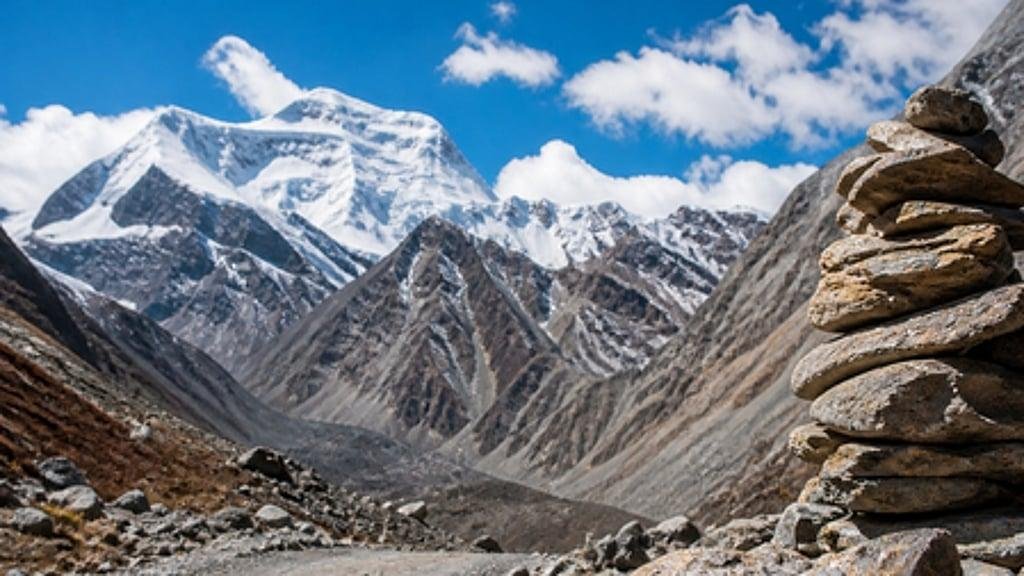
Day 1: Tarchen to Dirapuk (Zhirepu)
The Parikrama begins at Tarchen, the base camp of Mount Kailash. Pilgrims travel towards Yam Dwar, the traditional starting point of the sacred circumambulation. The trekking route continues towards Dirapuk, where travellers get magnificent views of the northern face of Mount Kailash.
- Approximate trekking distance: 12–13 km.
- Overnight stay: Dirapuk.
- Approximate altitude: 4,900 metres.
Day 2: Dirapuk to Zuthulpuk via Dolma La Pass
This is generally the most challenging day of the Kailash Parikrama. Pilgrims cross Dolma La Pass, which is approximately 5,600 metres above sea level. The route includes steep uphill and downhill sections, rocky paths and changing weather conditions. After crossing the pass, pilgrims descend towards the sacred Gauri Kund area and continue towards Zuthulpuk.
- Approximate trekking distance: 18–22 km.
- Highest point: Dolma La Pass.
- Overnight stay: Zuthulpuk region.
Day 3: Zuthulpuk to Tarchen
The final day involves completing the remaining trekking section through the mountain valley. After reaching the designated pickup location, pilgrims travel back towards Tarchen.
- Approximate trekking distance: 8–10 km.
- Parikrama completion: Return to Tarchen.
The distances and overnight arrangements may vary according to the official schedule and local operating conditions. The 2026 MEA itinerary specifies Zhirepu, Zunzhu Pu and Chugu as the relevant overnight locations. KMY
Government of India Registration Process for Lipulekh Kailash Mansarovar Yatra
The registration process for the Lipulekh route is managed by the Ministry of External Affairs, Government of India. Interested Indian citizens must submit their applications through the official Kailash Mansarovar Yatra portal. Official Registration Website: www.kmy.gov.in

The general application process involves the following steps:
Step 1: Visit the Official Website: Open the official KMY portal and read the latest information booklet, eligibility conditions and application instructions.
Step 2: Complete the Online Application: Enter your personal details, passport information, date of birth and contact details carefully. All information must match your passport.
Step 3: Select the Lipulekh Route: Applicants are required to indicate their preferences for both the Lipulekh and Nathu La routes in order of preference. They can also indicate their preferred return endpoint as permitted by the application process.
Step 4: Upload Required Documents: Upload the scanned passport-size photograph and passport pages in the formats and file sizes specified on the portal.
Step 5: Submit the Application: Review all the details before submitting the application. After successful registration, applicants receive an acknowledgement through SMS and email.
Step 6: Computerised Selection: The selection is conducted through a computerised draw of lots, subject to eligibility and available batch capacity. Applying does not guarantee selection.
Step 7: Confirmation and Medical Examination: Selected applicants must complete the prescribed payment and medical examination formalities within the official deadlines.
Step 8: Attend the MEA Briefing: Successful applicants attend the government briefing and complete the remaining documentation before departure. For the current year’s dates, application instructions and selection process, always refer to the official portal rather than relying on previous years’ announcements. KMY+1
Eligibility Criteria for Kailash Mansarovar Yatra via Lipulekh
The Government of India has established specific eligibility requirements for applicants.
💫The published conditions include:
- Applicant must be an Indian citizen.
- Applicant must hold an ordinary Indian passport.
- The applicant must generally be between 18 and 70 years of age.
- The passport must be valid for at least six months as of 1 September of the applicable pilgrimage year, according to the published application conditions.
- Applicants must be physically and medically fit.
- Applicants must successfully complete the prescribed medical examinations.
- Applicants must provide accurate information and complete all required documentation.
The MEA may revise eligibility conditions for a future pilgrimage season. Therefore, applicants should consult the latest official information booklet before applying.
Documents Required for Lipulekh Kailash Mansarovar Yatra
Pilgrims should keep the following documents ready before starting the online application process:
- Valid ordinary Indian passport.
- Recent passport-size photograph in the prescribed digital format.
- Scanned copy of the passport’s photograph and personal-details page.
- Scanned copy of the passport’s last page containing family details, as requested by the application portal.
- Completed online application.
- Required declarations and undertakings.
- Medical examination reports and other documents requested by the authorities.
The 2026 application instructions specify a JPG photograph not exceeding 300 KB and passport PDF documents not exceeding 500 KB. Applicants should check the current portal for updated upload specifications. KMY
Cost of Kailash Mansarovar Yatra via Lipulekh Pass
- The cost of the official Lipulekh pilgrimage is determined by the Government of India and the concerned service providers. It generally includes Indian-side logistical arrangements, medical examinations, visa-related charges, Tibetan-side accommodation and transportation, and other pilgrimage expenses.
According to the fee structure published on the official KMY portal for 2026, the following are listed components for the Lipulekh route:
| Expense | Published amount |
|---|---|
| Confirmation amount payable to KMVN | ₹5,000 |
| KMVN balance payment | ₹60,000 |
| Medical tests at DHLI | ₹5,500 |
| Stress Echo test, if advised | ₹2,500 |
| Chinese visa fee | ₹1,800 |
| Group activity pool contribution | ₹4,000 |
| Tibetan-side lodging, transportation and entry tickets | US$1,400 |
| Chinese-side porter charges, both ways | RMB 990 |
| Chinese-side pony and handler, both ways | RMB 2,370 |
These are listed charges from the 2026 official fee schedule, not a guaranteed all-inclusive total. Some items are conditional or depend on individual requirements. Additional personal and group expenses may apply. KMY
💫Note: Fees are subject to revision, currency fluctuations and the applicable year’s government instructions. Some payments may be non-refundable. Always read the latest fee schedule carefully.
Best Time for Kailash Mansarovar Yatra via Lipulekh Pass
The official Kailash Mansarovar pilgrimage generally takes place during the summer months, when weather and border conditions are comparatively suitable for high-altitude travel. The usual pilgrimage season is between June and August, although actual departure dates depend on the annual government schedule.
- June: Beginning of the pilgrimage season. Weather can remain cold in the higher Himalayan regions.
- July: A popular month for the pilgrimage, with relatively favourable summer conditions.
- August: Pilgrims can experience the beautiful Himalayan landscapes, although rain and changing weather may affect travel.
- September: Generally colder at higher elevations, and availability depends on official arrangements.
The exact dates are announced by the Ministry of External Affairs. Travellers should not book non-refundable arrangements until their selection and departure details are confirmed.
Accommodation, Food and Transportation Facilities
The Lipulekh pilgrimage involves different types of accommodation and transportation on the Indian and Tibetan sides.
Accommodation on the Indian Side:
- During the journey through Uttarakhand, pilgrims stay at designated accommodation facilities arranged through KMVN. The accommodation facilities vary according to the location and altitude.
- Pilgrims generally stay in hotels, guesthouses or designated accommodation facilities at Purang, Tarchen and the Parikrama locations. Facilities in remote mountain areas are relatively basic.
Food Arrangements:
- Meals are arranged according to the official programme. Indian vegetarian food is generally provided through the designated logistical arrangements, although food availability and facilities may vary during the journey.
Transportation:
- Delhi to Tanakpur: Road transportation.
- Tanakpur to Dharchula: Road transportation.
- Dharchula to Gunji: Designated local vehicles.
- Gunji to Nabhidhang: High-altitude road transportation.
- Lipulekh crossing: Jeep, short trekking section and onward vehicle arrangements as prescribed.
- Tibetan region: Designated buses and local transportation.
Medical Support:
- Medical examinations and prescribed health monitoring are important parts of the government pilgrimage programme. Pilgrims must follow the instructions of medical personnel and the designated Liaison Officer.
Important Medical and Safety Guidelines
- The Lipulekh Kailash Mansarovar Yatra is a high-altitude pilgrimage that requires good physical fitness and careful preparation.
- Even though transportation is available for several sections, pilgrims must be prepared for high-altitude walking and the demanding Kailash Parikrama.
💫Here are some important recommendations:
- Start regular walking and cardiovascular exercises at least 2–3 months before departure.
- Consult your doctor before applying for the pilgrimage.
- Complete all prescribed medical examinations.
- Follow the acclimatisation schedule at Gunji and Nabhidhang.
- Carry essential medicines and medical prescriptions.
- Wear warm clothing, thermal wear, gloves and suitable trekking shoes.
- Drink sufficient water and avoid overexertion.
- Inform the medical team immediately if you experience severe headache, nausea, dizziness or breathing difficulties.
- Follow the instructions of the Liaison Officer and local guides.
- Consider appropriate travel insurance that covers high-altitude medical emergencies and evacuation.
High-altitude sickness can affect anyone, regardless of physical fitness. Never ignore serious symptoms, and be prepared to stop or descend if advised by medical professionals.
Difference Between Lipulekh Pass and Nathu La Pass Routes
- The Government of India offers two official routes for the Kailash Mansarovar Yatra: Lipulekh Pass in Uttarakhand and Nathu La Pass in Sikkim.
- Both routes lead towards the sacred Mount Kailash and Lake Mansarovar, but their geographical conditions, travel arrangements and experiences differ.
| Particulars | Lipulekh Pass | Nathu La Pass |
|---|---|---|
| Indian State | Uttarakhand | Sikkim |
| Government Agency | MEA | MEA |
| Indian Logistics | KMVN | STDC |
| Border Crossing | Lipulekh Pass | Nathu La Pass |
| Starting Point | Delhi | Delhi |
| Indian Approach | Road and trekking | Predominantly road |
| High-Altitude Stops | Gunji, Nabhidhang | 15th Mile, Sherathang |
| Trekking | Border section and Kailash Parikrama | Kailash Parikrama |
| Main Attraction | Om Parvat and Kumaon Himalayas | Eastern Himalayan landscapes |
| Selection | Government selection process | Government selection process |
- Both routes have their own advantages. Lipulekh is particularly attractive to pilgrims who wish to experience the Kumaon Himalayan region and the historic mountain passage into Tibet. Nathu La offers a comparatively road-oriented approach on the Indian side.
- The final choice depends on the applicant’s preferences, available batches, medical fitness and official selection arrangements.
Why Plan Your Kailash Mansarovar Journey with Kailash Mansarovar Himalayas?
- A pilgrimage to Mount Kailash is much more than an ordinary international tour. It requires proper planning, physical preparation, documentation and an understanding of high-altitude travel.
- At Kailash Mansarovar Himalayas, we aim to help pilgrims understand the different routes and travel possibilities for visiting the sacred Mount Kailash and Lake Mansarovar.
💫Our team can assist with information regarding:
- Kailash Mansarovar Yatra packages through Nepal.
- Overland Kailash Mansarovar tours.
- Helicopter-based Kailash pilgrimage packages.
- Lhasa and Tibet travel options.
- Itinerary planning and accommodation information.
- Travel preparation and documentation guidance.
- Alternative pilgrimage options for different age groups and travel preferences.
Please remember that the official Lipulekh government pilgrimage has its own MEA application and selection procedure. Private tour operators cannot guarantee selection or independently issue government-route registrations.
Begin Your Sacred Journey to Mount Kailash
Kailash Mansarovar Himalayas I A Journey Beyond Faith
Discover available Kailash Mansarovar pilgrimage packages and let our travel experts guide you through your journey planning.
- 🚩Kailash Mansarovar Yatra 2027 Booking
- 🌐Website: https://kailashhimalayas.com
- 📞Contact: +91-8090767908
- 📩Email: kailashmansarovar19@gmail.com

Frequently Asked Questions (FAQs)
💫1. Is Kailash Mansarovar Yatra via Lipulekh Pass an official Government of India route?
Yes. Lipulekh Pass in Uttarakhand is one of the two official routes organised by the Ministry of External Affairs, Government of India. The Indian-side arrangements are coordinated through Kumaon Mandal Vikas Nigam.
💫2. How many days are required for the Lipulekh Kailash Mansarovar Yatra?
The official 2026 tentative itinerary covers 22 days, including Delhi reporting, medical examinations, the journey through Uttarakhand, Tibet travel, Kailash Parikrama and the return journey.
💫3. What is the starting point of the Lipulekh route?
The government-organised pilgrimage starts with reporting in Delhi. The road journey towards the Lipulekh region proceeds through Tanakpur, Dharchula, Gunji and Nabhidhang.
💫4. What is the altitude of Lipulekh Pass?
The 2026 official tentative itinerary lists Lipulekh Pass at approximately 5,050 metres above sea level. The pass is a high-altitude crossing, so proper acclimatisation is essential.
💫5. What is the age limit for Kailash Mansarovar Yatra via Lipulekh?
The published MEA eligibility conditions generally permit Indian citizens aged 18–70 years to apply, subject to passport and medical requirements. Always verify the current year’s guidelines.
💫6. Is a passport required for the Lipulekh Kailash Mansarovar Yatra?
Yes. Applicants must possess an ordinary Indian passport meeting the validity conditions specified by the Ministry of External Affairs.
💫7. What is the official website for Kailash Mansarovar Yatra registration?
The official application portal is https://kmy.gov.in. All application announcements, eligibility conditions, selection details and official instructions are published through the government portal.
💫8. Can I book the official Lipulekh route through a private travel agency?
No. The official government route is subject to the MEA application and selection process. Private agencies cannot guarantee a seat or issue an official government registration.
💫9. Is Om Parvat visible during the Lipulekh Kailash Yatra?
Nabhidhang is an important viewpoint for Om Parvat. Pilgrims may get an opportunity to see its naturally formed Om-like snow pattern, depending on weather and visibility.
💫10. Is the Kailash Parikrama compulsory?
The traditional pilgrimage includes the Kailash Parikrama, but the ability to undertake it depends on medical fitness and local arrangements. Anyone unable to complete the trek should discuss the available alternatives with the official authorities.