The Kailash Mansarovar Yatra via Lhasa is one of the most extraordinary spiritual journeys in the world. Located in the remote Tibetan region, Mount Kailash is regarded as the sacred abode of Lord Shiva and Goddess Parvati. Every year, thousands of devotees from India and other countries dream of visiting this holy mountain and taking a spiritual dip in the divine waters of Lake Mansarovar.
- Unlike the traditional overland journey through Kathmandu and Kerung, the Lhasa route offers pilgrims an opportunity to explore the beautiful Tibetan capital before travelling towards Mount Kailash and Lake Mansarovar. This route combines spiritual exploration, Tibetan culture, breathtaking Himalayan landscapes and the unforgettable experience of Kailash Parikrama.
- For pilgrims looking for a well-planned journey with additional sightseeing and a gradual approach towards the sacred mountain, the Kailash Mansarovar Yatra via Lhasa can be an excellent option.
- In this guide, we will explain the complete route, travel itinerary, important attractions, accommodation, permits, medical preparation and other essential information to help you plan your pilgrimage.
- Kailash Mansarovar yatra offiicial website- https://kmy.gov.in/
Why Choose Kailash Mansarovar Yatra via Lhasa?
The Lhasa route is becoming an attractive option for pilgrims who want to explore more of Tibet along with their sacred journey to Mount Kailash. Instead of travelling directly towards the Kailash region, this route begins with a visit to Lhasa, the cultural and spiritual centre of Tibet. Pilgrims can explore its famous monasteries, historic temples and magnificent Tibetan architecture before continuing towards the western Tibetan plateau.
Here are some important reasons to consider this route:
- Explore Lhasa: Visit the famous Potala Palace, Jokhang Temple and traditional Tibetan markets.
- Experience Tibetan Culture: Discover ancient Buddhist monasteries, traditional architecture and local traditions.
- Scenic Road Journey: Enjoy spectacular views of the Himalayan landscapes, high-altitude lakes and vast Tibetan plateau.
- Visit Lake Mansarovar: Experience the spiritual atmosphere of one of the most sacred lakes in Hinduism.
- Mount Kailash Darshan: Witness the magnificent beauty of the holy Mount Kailash.
- Complete Kailash Parikrama: Undertake the sacred three-day circumambulation of Mount Kailash, subject to health and weather conditions.
The journey is not simply a sightseeing tour; it is a combination of devotion, adventure, cultural discovery and personal transformation.
Kailash Mansarovar Yatra via Lhasa Route
- The Kailash Mansarovar Yatra via Lhasa generally follows a fly-in and drive-out travel arrangement, although the exact route may vary according to the package, border conditions and operating permissions.
- A commonly offered itinerary starts from Kathmandu, Nepal, with a flight to Lhasa. After exploring Lhasa, pilgrims continue their journey by road towards the Mount Kailash region.
Major Route:
💫Kathmandu → Lhasa → Lhatse → Saga → Paryang → Lake Mansarovar → Darchen → Yam Dwar → Dirapuk → Dolma La Pass → Zuthulphuk → Darchen → Saga → Nepal Border → Kathmandu.

- The route allows travellers to explore the spiritual attractions of Lhasa before heading towards the remote Kailash region. The road journey also provides opportunities to experience the unique geographical beauty of Tibet.
- According to one published 16-day fly-in and drive-out itinerary, the journey includes Kathmandu sightseeing, Lhasa sightseeing, travel through Lhatse and Saga, Lake Mansarovar, and the three-day Kailash Parikrama. Actual itineraries can differ between operators.
Major Attractions Covered During the Lhasa Kailash Yatra
1. Lhasa – The Spiritual Capital of Tibet

Lhasa is one of the most fascinating destinations in Tibet. Situated at approximately 3,650 metres above sea level, this historic city is famous for its monasteries, Buddhist culture and magnificent architecture.
💫Pilgrims usually spend time exploring the following attractions:
- Potala Palace: The iconic palace is one of Tibet’s most recognised landmarks and an architectural masterpiece.
- Jokhang Temple: One of the most sacred Buddhist temples in Tibet, attracting pilgrims throughout the year.
- Barkhor Street: A traditional market area where visitors can experience Tibetan culture, handicrafts and local life.
- Drepung Monastery: A historic Tibetan Buddhist monastery known for its religious importance.
- Sera Monastery: Famous for its traditional Buddhist debating sessions and monastery complex.
Spending time in Lhasa also provides an opportunity to become familiar with the high-altitude environment before continuing towards western Tibet.
2. Lhatse – Gateway Towards Western Tibet

- After completing the Lhasa sightseeing programme, the journey continues towards Lhatse. This region is known for its beautiful mountain landscapes, open valleys and traditional Tibetan settlements.
- The road journey offers a glimpse of the vast Tibetan plateau, where snow-covered mountains and rugged landscapes create an unforgettable experience.
3. Saga – Important Stop on the Kailash Route
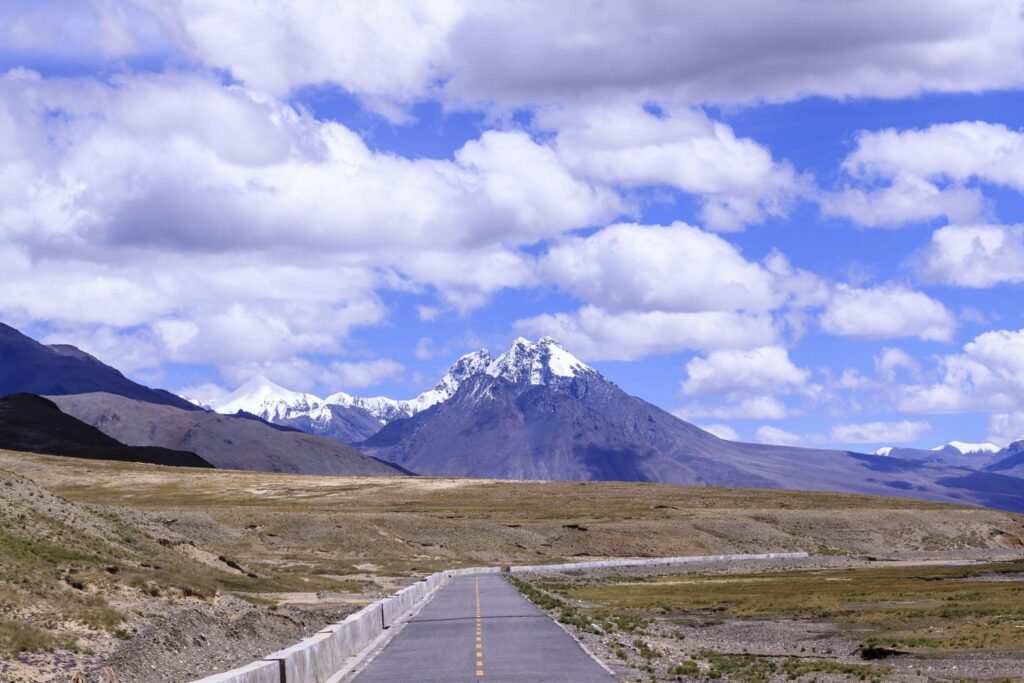
- Saga is an important stopover on the way to Mount Kailash and Lake Mansarovar. Located in the western part of Tibet, it serves as a key transit point for pilgrims travelling towards the sacred region.
- Travellers can experience the changing landscapes of Tibet while travelling through this remote destination.
4. Lake Mansarovar – The Sacred Lake of Lord Shiva

- Lake Mansarovar is one of the most sacred pilgrimage destinations in Hinduism. Situated at approximately 4,590 metres above sea level, the lake is associated with spiritual purity and divine blessings.
- According to Hindu beliefs, Lake Mansarovar was created by Lord Brahma and is closely connected with Lord Shiva.
- Pilgrims visiting the lake traditionally perform prayers, meditation, puja and other religious rituals. The peaceful surroundings, crystal-clear water and magnificent Himalayan scenery make this destination one of the most memorable parts of the journey.
- Depending on local regulations, weather and the operating arrangements, pilgrims may get opportunities for religious activities near the lake.
5. Mount Kailash – The Sacred Abode of Lord Shiva

- Mount Kailash is the spiritual highlight of the entire pilgrimage. Standing at approximately 6,638 metres, this sacred mountain holds immense religious significance for Hindus, Buddhists, Jains and followers of the Bon religion.
- For Hindu devotees, Mount Kailash is believed to be the divine residence of Lord Shiva and Goddess Parvati.
- Unlike ordinary mountain expeditions, climbing Mount Kailash is not the objective of this pilgrimage. Devotees undertake the sacred Parikrama around the mountain to express their faith and devotion.
Kailash Parikrama – The Most Important Part of the Yatra
- The Kailash Parikrama, also known as Kailash Kora, is a sacred circumambulation of Mount Kailash. The traditional outer Parikrama covers approximately 52 kilometres and is generally completed over three days.
- It is considered the most physically demanding part of the pilgrimage because of the high altitude, steep mountain trails and unpredictable weather.
💫Day 1: Darchen to Dirapuk
The Parikrama begins from Darchen, the base camp of Mount Kailash. Pilgrims travel towards Yam Dwar, an important religious point from where the sacred walk begins. The trekking route continues towards Dirapuk Monastery, offering magnificent views of the northern face of Mount Kailash.
- Approximate trekking distance: 12 km
- Overnight stay: Dirapuk
- Approximate altitude: 4,900 metres
Day 2: Dirapuk to Zuthulpuk via Dolma La Pass
This is the most challenging day of the entire Kailash Mansarovar Yatra. Pilgrims cross Dolma La Pass, situated at approximately 5,630 metres above sea level. The trail involves a steep ascent followed by a descent towards Gauri Kund and the Zuthulpuk region.
- Approximate trekking distance: 22 km
- Highest point: Dolma La Pass
- Overnight stay: Zuthulpuk
Day 3: Zuthulpuk to Darchen
The final day involves a relatively easier descent through beautiful valleys and mountain landscapes. After completing the remaining trekking section, pilgrims reach the designated vehicle pickup point and return towards Darchen.
- Approximate trekking distance: 8–10 km
- Parikrama completion: Return to Darchen
The Parikrama schedule and distances may vary slightly depending on the route conditions and local arrangements.
Kailash Mansarovar Yatra via Lhasa – Sample 16-Day Itinerary
The following is an indicative itinerary based on a fly-in and drive-out arrangement. The final programme may change according to flight availability, permits, road conditions and local regulations.
| Day | Programme | Overnight Stay |
|---|---|---|
| Day 01 | Arrival in Kathmandu, airport pickup and tour briefing | Kathmandu |
| Day 02 | Kathmandu sightseeing, including Pashupatinath Temple and Boudhanath | Kathmandu |
| Day 03 | Flight from Kathmandu to Lhasa and hotel transfer | Lhasa |
| Day 04 | Lhasa sightseeing – Potala Palace, Jokhang Temple and Barkhor Street | Lhasa |
| Day 05 | Visit Drepung and Sera Monasteries | Lhasa |
| Day 06 | Drive from Lhasa towards Lhatse | Lhatse |
| Day 07 | Drive from Lhatse to Saga | Saga |
| Day 08 | Continue towards Paryang through the Tibetan plateau | Paryang |
| Day 09 | Drive to Lake Mansarovar and enjoy the first Darshan of Mount Kailash | Mansarovar |
| Day 10 | Mansarovar religious activities and transfer to Darchen | Darchen |
| Day 11 | Start Kailash Parikrama – Darchen to Dirapuk | Dirapuk |
| Day 12 | Trek from Dirapuk to Zuthulpuk via Dolma La Pass | Zuthulpuk |
| Day 13 | Complete Parikrama and drive towards Dongba | Dongba |
| Day 14 | Drive towards Nyalam | Nyalam |
| Day 15 | Cross the Nepal-Tibet border and drive to Kathmandu, subject to border arrangements | Kathmandu |
| Day 16 | Airport transfer and departure | Departure |
Important: This is a sample itinerary, not a confirmed departure schedule. Some operators offer different flight, road and border combinations. Additional buffer days may be necessary.
Permits and Visa Requirements for Kailash Mansarovar Yatra via Lhasa
Since Mount Kailash and Lake Mansarovar are located in the Tibet Autonomous Region of China, travellers must complete the necessary immigration and travel formalities before entering Tibet.
💫The main requirements generally include:
- Valid Passport: A valid passport is essential for international travel and permit processing.
- Chinese Visa or Group Visa: The applicable Chinese visa arrangement depends on the traveller’s nationality and the approved route.
- Tibet Travel Permit: This is required for travel within Tibet and is generally arranged through an authorised local travel operator.
- Additional Travel Permits: Certain restricted areas may require additional permits or approvals.
- Travel Documentation: Passport copies, photographs and other documents may be required during registration.
Pilgrims should not assume that visa rules are identical for Indian citizens, NRIs and foreign passport holders. Requirements can differ depending on nationality and the route being operated. Always verify the latest instructions before booking.
Best Time for Kailash Mansarovar Yatra via Lhasa
The usual pilgrimage season is between May and September, although exact departure dates depend on weather conditions, travel permissions and the operating schedule.
💫Here is a general overview:
- May: Beginning of the pilgrimage season, with potentially cold conditions.
- June: A popular period for travellers seeking relatively favourable summer conditions.
- July: A suitable period for experiencing the Tibetan plateau, although rain and changing weather are possible.
- August: Another popular travel month, with variable weather conditions.
- September: Cooler conditions begin to return, particularly at higher elevations.
The weather in Tibet can change rapidly. Even during summer, temperatures at high-altitude locations can fall considerably, especially at night.
Accommodation, Transportation and Meals
- The Kailash Mansarovar Yatra via Lhasa generally includes different types of accommodation and transportation depending on the package category.
- Accommodation: Pilgrims usually stay in hotels in Kathmandu and Lhasa, while guesthouses or basic lodges are commonly used during the Kailash journey. Accommodation near Lake Mansarovar, Dirapuk and Zuthulpuk is relatively basic because of the remote location.
- Transportation: The Lhasa sightseeing programme is generally conducted by tourist vehicles. The journey towards Mount Kailash is usually completed by road in suitable tourist coaches or designated vehicles.
- Meals: Meal arrangements vary by package. Indian vegetarian meals may be available during the Kailash section, while meal options in Lhasa and other cities depend on the selected package.
- Support Team: An organised pilgrimage package may include a Tibetan guide, local support staff, transportation coordination and assistance with permit formalities.
- Always check the written inclusions and exclusions before making your booking.
Important Health and Safety Tips for the Yatra
The Kailash Mansarovar pilgrimage involves travelling through some of the world’s highest inhabited and remote regions. Therefore, proper preparation is essential.
- Consult your doctor before planning the journey.
- Start regular walking and cardiovascular exercises several weeks before departure.
- Allow sufficient time for altitude acclimatisation.
- Drink adequate water and avoid overexertion.
- Carry warm jackets, thermal wear, gloves and comfortable trekking shoes.
- Keep essential personal medicines and prescriptions.
- Consider travel insurance that specifically covers high-altitude medical emergencies and evacuation.
- Follow the instructions of your guide during the Parikrama.
- Never ignore symptoms such as severe headache, vomiting, breathing difficulty or unusual weakness.
High-altitude sickness can become life-threatening. No itinerary or acclimatisation schedule can eliminate the risk completely. Travellers should be prepared to stop or descend if medically necessary.
What Is the Cost of Kailash Mansarovar Yatra via Lhasa?
The cost of the Kailash Mansarovar Yatra via Lhasa depends on several factors, including the duration of the tour, group size, flight arrangements, accommodation category, transportation and services included in the package.
💫The major factors affecting the package price include:
- International and domestic flight arrangements.
- Chinese visa and Tibet travel permits.
- Hotel accommodation in Kathmandu and Lhasa.
- Guesthouse accommodation during the Kailash journey.
- Transportation throughout Tibet.
- Meals and local support services.
- Tibetan guide and trekking assistance.
- Government taxes and other applicable charges.
A longer itinerary that includes Lhasa sightseeing may cost more than a shorter journey because of additional hotel nights, transportation and sightseeing expenses. At Kailash Mansarovar Himalayas, travellers can enquire about available group departures and customised pilgrimage arrangements according to their budget and travel preferences.
Kailash Mansarovar Yatra via Lhasa – Important Things to Remember
💫Before booking your journey, keep these important points in mind:
- Book your pilgrimage well in advance because permits and group arrangements require advance coordination.
- Ensure that your passport is valid for the required travel period.
- Confirm the visa and permit requirements applicable to your nationality.
- Choose an itinerary that allows sufficient time for acclimatisation.
- Understand the difficulty level of the three-day Kailash Parikrama.
- Check whether meals, accommodation, transportation and local guide services are included.
- Keep additional funds for personal expenses and unexpected delays.
- Confirm cancellation policies and travel insurance coverage before making payment.
Book Your Kailash Mansarovar Yatra via Lhasa with Kailash Mansarovar Himalayas
- The journey to Mount Kailash and Lake Mansarovar is a dream for millions of devotees. Travelling through Lhasa makes this spiritual experience even more memorable by combining the cultural beauty of Tibet with the divine surroundings of Mount Kailash.
- At Kailash Mansarovar Himalayas, we aim to make your pilgrimage comfortable, organised and memorable. From travel planning and accommodation to transportation, permits and local assistance, our team can help you understand the available tour arrangements.
- Whether you are travelling individually, with family or in a group, we can help you explore suitable Kailash Mansarovar Yatra packages.
Plan your sacred journey to the abode of Lord Shiva with Kailash Mansarovar Himalayas.
- 🚩Kailash Mansarovar Yatra 2027 Booking
- 🌐Website: https://kailashhimalayas.com
- 📞Contact: +91-8090767908
- 📩Email: kailashmansarovar19@gmail.com

Contact our travel experts for the latest package prices, available departure dates, itinerary details and booking assistance.
Frequently Asked Questions (FAQs)
1. What is Kailash Mansarovar Yatra via Lhasa?
Kailash Mansarovar Yatra via Lhasa is a pilgrimage route in which travellers visit Lhasa, explore its famous monasteries and temples, and then continue towards Lake Mansarovar and Mount Kailash. It generally involves flying into Lhasa and travelling by road towards the Kailash region.
2. How many days are required for Kailash Mansarovar Yatra via Lhasa?
Generally, a 15–16-day itinerary is offered, depending on the route, sightseeing programme, border arrangements and travel operator. Some customised packages may require additional days.
3. Is Lhasa included in the Kailash Mansarovar package?
Yes, many Lhasa-route packages include sightseeing in Lhasa, covering attractions such as Potala Palace, Jokhang Temple, Barkhor Street, Drepung Monastery and Sera Monastery. However, inclusions vary between packages.
4. What is the distance of Kailash Parikrama?
The traditional outer Kailash Parikrama covers approximately 52 kilometres and is generally completed over three days. The second day, which includes crossing Dolma La Pass, is considered the most challenging.
5. Is Kailash Mansarovar Yatra via Lhasa suitable for senior citizens?
Senior citizens may be able to undertake the journey depending on their physical fitness and medical condition. However, the pilgrimage involves high altitudes and strenuous trekking. A medical assessment and doctor’s advice are essential before booking.
6. Do Indian citizens require a visa for the Lhasa Kailash Yatra?
Indian citizens travelling via Lhasa must follow the applicable Chinese visa and Tibet travel permission procedures. The exact documentation and processing arrangements should be confirmed with the authorised tour operator before departure.
7. What is the best month for Kailash Mansarovar Yatra via Lhasa?
May to September is generally considered the main pilgrimage season. June, July and August are popular months, although weather and travel conditions can change.
8. Can we complete Kailash Mansarovar Yatra without trekking?
The road journey can take pilgrims close to Mount Kailash and Lake Mansarovar, but the traditional outer Parikrama involves trekking. Pilgrims who cannot undertake the full Parikrama should discuss alternative arrangements with their tour operator.